

Dog owner guide · Behaviour & wellbeing
Why Does My Dog Do That? 15 Common Dog Behaviours Explained
Grass eating, staring, licking, zoomies and head tilts: what might your dog be trying to tell you?
Most of these habits are ordinary. What matters is the context, your dog’s usual behaviour and whether anything has changed. If your dog seems unwell, your vet is the right person to ask.
01 / 15
Why do dogs eat grass?
There is no single explanation: some dogs seem to enjoy the taste or texture, while boredom or normal foraging may play a part. Eating grass does not automatically mean your dog is ill.
If your dog suddenly eats large amounts, repeatedly vomits, loses their appetite or seems unwell, contact your vet.
02 / 15
Why does my dog lick me?
Licking is a natural way for dogs to communicate. It can be a way to seek attention, show affection, groom, comfort themselves or explore interesting smells and tastes.
Sudden or excessive licking, especially repeated licking of their own body, may be a sign of anxiety, discomfort or pain and is worth discussing with a vet.
03 / 15
Why does my dog stare at me?
Your dog may be waiting for food, a walk, a toy or your attention. Dogs also watch our body language closely to work out what we will do next.
Consider the situation and your dog's whole body language rather than assuming every stare means the same thing.
04 / 15
Why does my dog follow me everywhere?
Dogs are social animals, and following you may simply mean they like being near you. They may also have learned that staying close leads to attention, food, play or walks.
If your dog becomes very distressed when left alone, ask your vet or a qualified behaviour professional about separation-related problems.
05 / 15
Why is my dog shaking?
A dog might shake because they are cold, excited, frightened, stressed, drying off or uncomfortable. The context matters.
Persistent or unexplained shaking, especially with vomiting, weakness, unusual behaviour or signs of pain, should be discussed with a vet.
06 / 15
Why do dogs eat poo?
Eating faeces, also called coprophagia, can occur because of curiosity, a learned habit, scavenging or environmental factors.
If it starts suddenly or happens frequently, speak to your vet so medical and dietary causes can be considered.
07 / 15
Why does my dog lick my feet?
Feet carry strong smells and salty perspiration. Your dog may be investigating those smells or may have learned that licking your feet gets an immediate reaction.
Even telling them to stop can count as attention, so pay attention to what happens before and after the licking.
08 / 15
Why is my dog panting?
Panting helps dogs regulate body temperature, so it is common after exercise or in warm weather. Excitement and stress can also cause panting.
Heavy or unusual panting can be a sign of overheating, pain or illness. If your dog is struggling to breathe, collapses or may have heatstroke, seek urgent veterinary help.
09 / 15
Why do dogs sleep so much?
Dogs often sleep more than people. How much depends on their age, breed and activity; puppies and older dogs may need especially long periods of rest.
Rather than fixating on a number of hours, watch for a sudden change from your dog's normal routine, especially if they also seem lethargic or unwell.
10 / 15
Why does my dog roll onto their back?
Sometimes a dog is relaxed and inviting a belly rub; at other times they may be trying to avoid conflict. An exposed belly is not always an invitation to touch.
Look at the whole body: a loose, relaxed dog is different from one that seems tense, frightened or uncomfortable.
11 / 15
Why does my dog get the zoomies?
Short bursts of frantic running are common, especially in young dogs. They may happen after excitement, bathing, exercise or a period of inactivity.
Give your dog a safe space where they are unlikely to crash into furniture, people or traffic.
12 / 15
Why does my dog sniff everything?
Smell is central to how dogs explore the world. The ordinary lamp post you walk past can be full of information for your dog.
Letting your dog stop and sniff in safe places during walks can provide valuable mental stimulation.
13 / 15
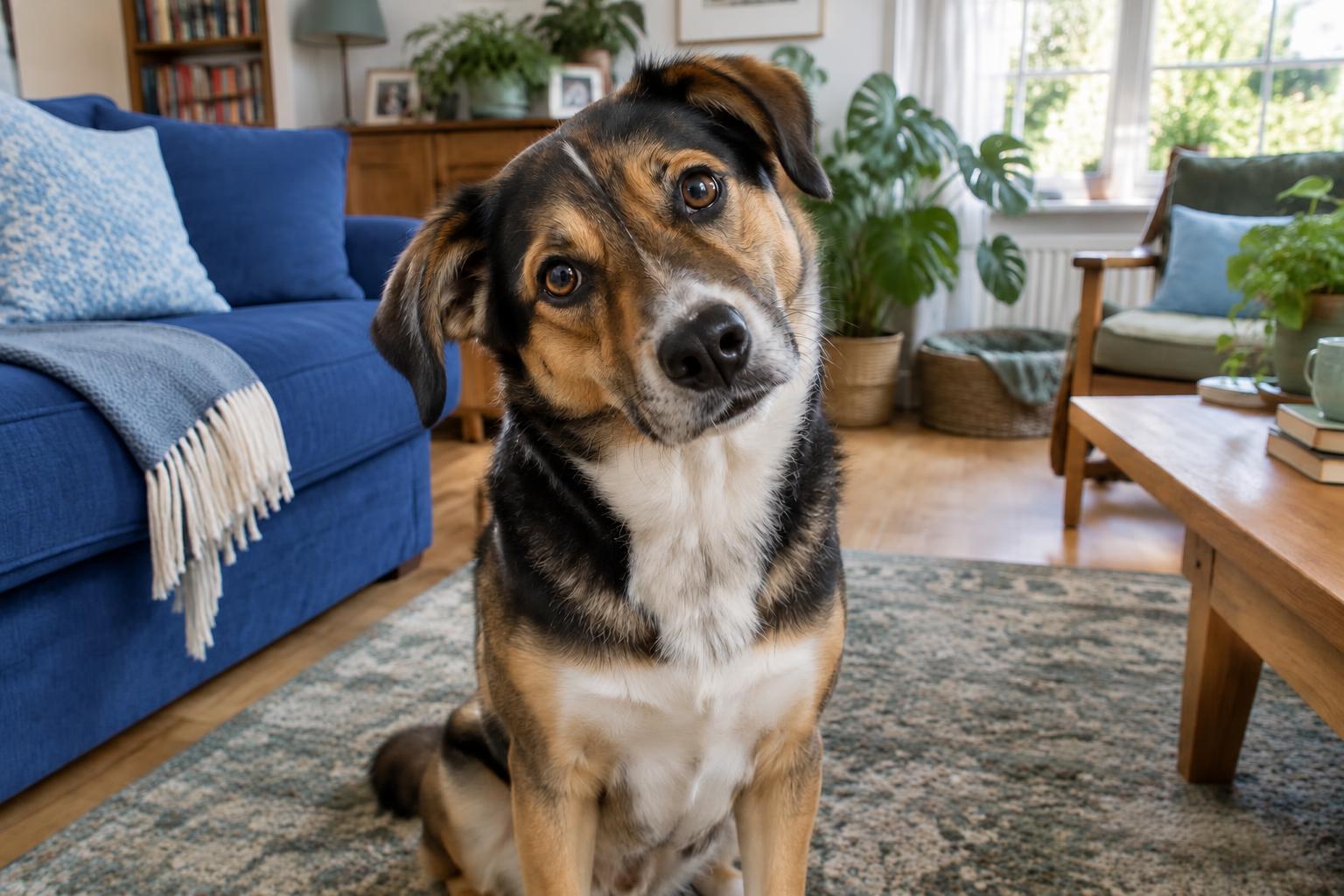
Why does my dog tilt their head?
Dogs may tilt their heads while listening closely or working out where a sound comes from. Some may also learn that the gesture gets a positive reaction from people.
A persistent head tilt, especially with balance problems or other symptoms, is different from an occasional curious tilt and should be checked by a vet.
14 / 15
Why does my dog sit on me?
Your dog may find being close to you reassuring and comfortable. Some dogs simply prefer a lot of physical contact with their people.
If both of you are comfortable, having a self-appointed lap dog is usually nothing unusual.
15 / 15
Does my dog know that I love them?
Dogs cannot tell us exactly how they experience human love, but they can form strong social bonds and recognise our voices, routines and gestures.
Safety, attention, exercise, play, food and consistent care all help build that relationship.
Keeping your dog safe
Understanding your dog is one part of looking after them. Identification matters too. In England, dogs generally must be microchipped by eight weeks old, and dogs in public places must wear a collar showing the owner's name and address, with limited exceptions. Check the rules that apply where you live in our UK dog laws guide.
TapHalo NFC Pet ID adds another way for a finder with a compatible smartphone to open your dog's web profile and see the contact details you choose to share. You can update the online information without replacing the NFC chip. It is not a GPS tracker and does not replace a microchip or legally required collar ID.
More for dog owners
Leaving your dog with a sitter? Read our pet sitter checklist or find out how long a dog can be left alone. If your dog goes missing, you can also create a free Lost Pet Alert.
This general guide is not a diagnosis. Seek veterinary advice for sudden changes, persistent symptoms or concerns about your dog's health.