

Pet safety guide
Is It Safe to Let Your Cat Outside in London?
An evidence-based guide for London cat owners.
If you live in London, deciding whether to let your cat outside isn't always straightforward. Cats can benefit from outdoor stimulation, exploration and opportunities to express natural behaviours. But London also presents risks including busy roads, traffic, other animals, infectious disease, getting lost and theft.
So, is it safe to let your cat outside in London? The answer depends considerably on where you live, your cat's age, health and personality, and what type of outdoor access you can provide. For some London cats, free roaming may be reasonable. For others — particularly those living near heavily trafficked roads — indoor living or controlled outdoor access may be the safer option. Here's what the evidence and UK animal-welfare guidance tell us.
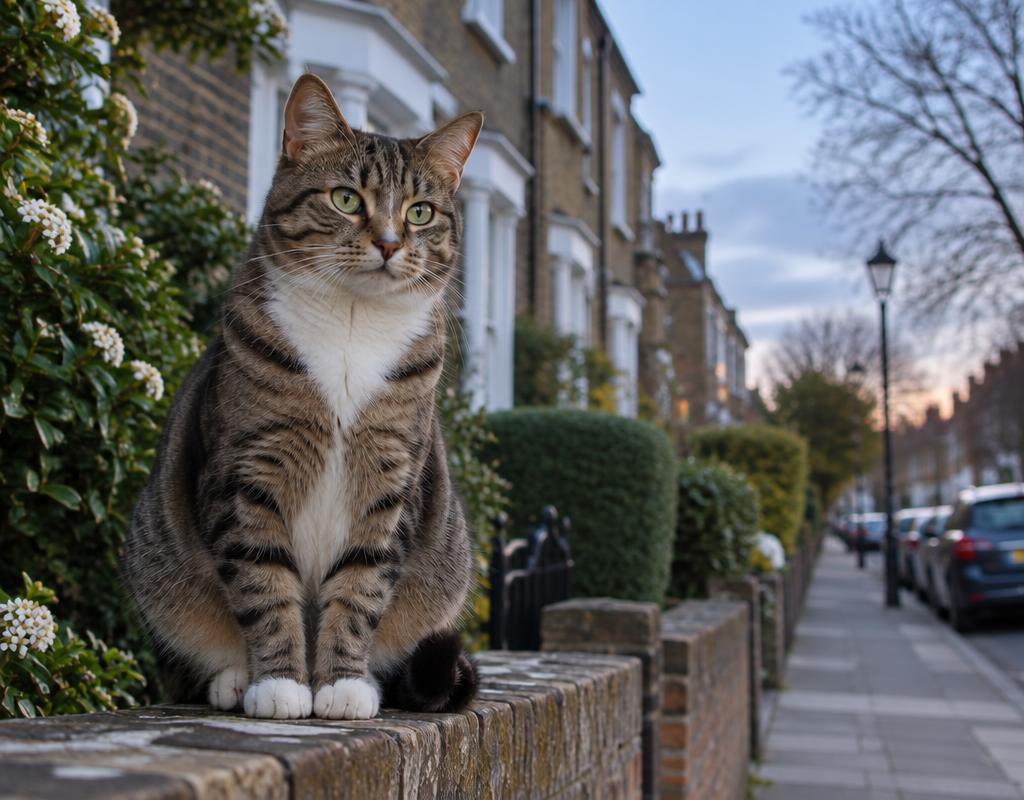
What are the main risks for outdoor cats in London?
1. Road traffic
For many London cat owners, traffic is the most obvious concern. Any freely roaming cat can encounter vehicles, but the risk becomes particularly important in densely populated areas with busy roads.
UK veterinary charity PDSA warns that any cat spending time outdoors is at risk of a road traffic accident. Cats can also suffer serious internal injuries following a collision even when there are few obvious external injuries.
For someone living beside a busy London road, this is therefore an important factor when deciding whether unrestricted outdoor access is appropriate.
2. Cats can travel further than owners expect
Opening the back door doesn't necessarily mean your cat will remain in your garden. Cats naturally explore territories.
An apparently safe garden can therefore provide access to neighbouring gardens, streets, railway areas or other hazards.
Neutering is one practical precaution. PDSA advises that neutering can reduce roaming associated with seeking a mate, which can also help reduce exposure to roads and other risks.
3. Night-time roaming
Allowing a cat outside at night deserves particular consideration. PDSA notes that studies indicate cats may be more likely to be involved in road traffic accidents at night and suggests owners consider keeping their cats indoors overnight.
For London owners who want their cat to have outdoor access, a compromise can therefore be: outdoor access during appropriate daytime periods, plus indoors overnight. This doesn't eliminate risk, but it can form part of a risk-reduction approach.
4. Other cats and fighting
London's density doesn't only mean more people and vehicles. There can also be many cats occupying overlapping territories.
Cats are territorial, and encounters can result in fighting. Bites and scratches can cause injuries and infections, while repeated territorial conflict can also cause stress. Having your cat neutered can help reduce some territorial and roaming behaviour.
5. Parasites and infectious disease
Outdoor cats have greater opportunities to encounter other animals and environments containing fleas, ticks, worms and infectious diseases.
Before allowing a cat outside, PDSA recommends ensuring they're appropriately vaccinated and treated for parasites, as well as neutered and microchipped. Speak to your vet about the preventative healthcare appropriate for your individual cat.
6. Getting lost
Even cats familiar with their neighbourhood can become lost. They can become frightened, accidentally trapped in sheds or garages, wander beyond their normal territory or become disorientated after moving home.
Identification therefore matters even for cats that normally stay close to home.
Microchipping your cat is essential
In England, microchipping isn't simply a recommendation.
Since 10 June 2024, owned cats in England must generally be microchipped before they reach 20 weeks of age, with the owner's contact details registered and kept up to date on an approved database.
Microchipping gives vets and other appropriate organisations a way to identify a lost cat using a microchip scanner.
But owners need to remember one important detail: a microchip is only as useful for contacting you as the information registered against it. If you move home or change your telephone number, update your cat's microchip record.
Could digital identification provide another layer?
A microchip is implanted beneath your cat's skin and requires suitable equipment to read it. Digital identification can provide an additional, externally accessible route.
A TapHalo NFC Pet ID Tag, for example, connects a physical tag on the pet's collar to a digital pet profile. Someone finding the cat can use a compatible NFC-enabled smartphone to interact with the tag and access the information the owner has chosen to make available.
This doesn't replace microchipping. Instead, it provides another potential route for connecting a found cat with its owner. Microchip + visible identification + digital identification can provide different ways of helping identify a lost pet. For a fuller explanation, read our complete guide to NFC Pet ID tags.
What about cat theft?
Theft is another concern owners sometimes have about allowing cats outside. Pet theft does occur, although it should be kept in perspective alongside more routine outdoor risks such as road traffic.
Government evidence cited when introducing the Pet Abduction Act referred to more than 400 reported cat-theft crimes in 2020. The Pet Abduction Act 2024 subsequently created specific offences relating to dog and cat abduction in England and Northern Ireland.
Owners of valuable or particularly distinctive breeds may decide that unrestricted roaming isn't a risk they're comfortable taking.
Is keeping a cat indoors better?
Not automatically. Indoor living removes or substantially reduces some outdoor risks, particularly traffic accidents and exposure to certain parasites and infectious diseases. But indoor living has its own welfare considerations.
The RSPCA explains that outdoor access gives cats opportunities to perform natural behaviours including exploring, climbing, roaming and communicating with other cats. An indoor environment can become predictable and boring if those behavioural needs aren't replaced with suitable stimulation. This can contribute to inactivity, obesity or stress in some cats.
So the question shouldn't simply be "inside or outside?" A better question is: "How can I provide my particular cat with a stimulating life while managing the risks where I live?"
Can cats live happily indoors?
Yes. Many cats can live happy, healthy lives indoors when their physical and behavioural needs are properly met.
PDSA's 2024 PAW Report found that around 31% of surveyed UK cats lived indoors only, while approximately 67% had both indoor and outdoor access. Interestingly, the report found no difference in the proportion showing one or more specified indicators of stress between indoor-only cats and cats living both indoors and outdoors.
That doesn't mean indoor and outdoor lifestyles are equivalent for every individual cat. Personality, previous experience, age, health and the quality of the indoor environment all matter.
The middle ground: controlled outdoor access
For London owners concerned about unrestricted roaming, the decision doesn't have to be simply free roaming or permanently indoors. Controlled outdoor access provides another option.
Cat-proof garden
Specialist fencing can make it more difficult for a cat to leave your garden while still allowing them to experience fresh air and outdoor stimulation.
Catio
A catio is an enclosed outdoor area specifically designed for cats. It can allow climbing, resting, watching wildlife and enjoying fresh air without allowing unrestricted access to roads. Both PDSA and the RSPCA discuss secure outdoor environments as an option for reducing some of the risks associated with free roaming.
Supervised garden access
Some cats may also be comfortable exploring a secure garden while their owner is present.
What about walking a cat on a lead?
This won't suit every cat. Unlike dogs, cats often prefer to control where they go and how they explore. PDSA cautions that many cats find harnesses and leads restrictive and stressful.
If a particular cat is comfortable with a harness, introductions should be gradual and positive rather than forced.
Before letting your cat outside in London
Consider this checklist before allowing unrestricted outdoor access.
- Microchipped. Make sure the registered contact information is current.
- Neutered. This can reduce roaming and some territorial behaviours.
- Vaccinated. Discuss the appropriate vaccination programme with your vet.
- Parasite protection. Ensure appropriate flea, tick and worm protection.
- Identification. Consider suitable visible identification and additional digital identification.
- Assess your road. Look beyond your garden. Where can your cat travel once they climb the fence?
- Consider night-time risk. Keeping your cat indoors overnight may reduce some exposure to road traffic.
- Establish a routine. Encourage your cat to return home regularly.
- Consider secure outdoor alternatives. A cat-proof garden or catio may provide outdoor stimulation without unrestricted roaming.
So, is it safe to let a cat out in London?
There isn't one answer that applies to every London cat. A cat living on a quiet residential street with protected gardens faces a different environment from a cat whose home backs directly onto a heavily trafficked London road.
Outdoor access provides genuine behavioural opportunities, but free roaming also exposes cats to risks including road traffic accidents, fights, infectious disease, parasites and becoming lost. Indoor living removes many of those external risks, but owners then need to provide sufficient exercise, play, climbing, exploration and mental stimulation.
For many London households, controlled outdoor access through a secure garden or catio can provide a useful middle ground.
The decision should ultimately be based on your individual cat and your immediate environment. If you're uncertain — particularly if your cat has a health condition, disability or unusual behavioural needs — discuss their circumstances with your vet.
If your cat does go missing
Act quickly.
- Search your home, garden and surrounding area.
- Ask neighbours to check sheds, garages and outbuildings.
- Contact local vets and animal organisations.
- Report your cat as missing to the database holding their microchip registration.
- Post a recent photograph in appropriate local lost-pet and community groups.
And make sure someone finding your cat has a way to contact you.
Connected Pets. Complete Peace of Mind.
Give your cat more than one route home
Microchipping provides permanent identification. An accessible digital ID can provide another connection. The TapHalo NFC Pet ID Tag links your cat's collar to a digital profile that can be accessed using a compatible smartphone — if someone finds your cat, they can interact with the tag and access the information you've chosen to provide. TapHalo doesn't replace your cat's legally required microchip; it adds another accessible layer of identification. Because when a pet goes missing, making it easier for the finder to reach the owner matters.