

Dog owner guide · 2026
UK Dog Laws Every Owner Needs to Know in 2026
From dog microchips and collar ID to lead restrictions and livestock, here are the essentials to check before heading out with your dog.
Rules differ across the four UK nations and local areas. This guide explains the key requirements, identifying England-specific rules where relevant, and links to official sources so you can check what applies to you.
Does my dog have to be microchipped?
In England, dogs generally need to be microchipped by eight weeks old. The chip must be registered on an approved database, and keep your contact details up to date if you move or change your phone number. Requirements elsewhere in the UK have their own legislation; check the rules for your nation.
A microchip gives a dog permanent identification, but a suitable scanner is needed to read it. A finder on the street may not have one. Check the official microchipping guidance.
Does my dog need an ID tag in the UK?
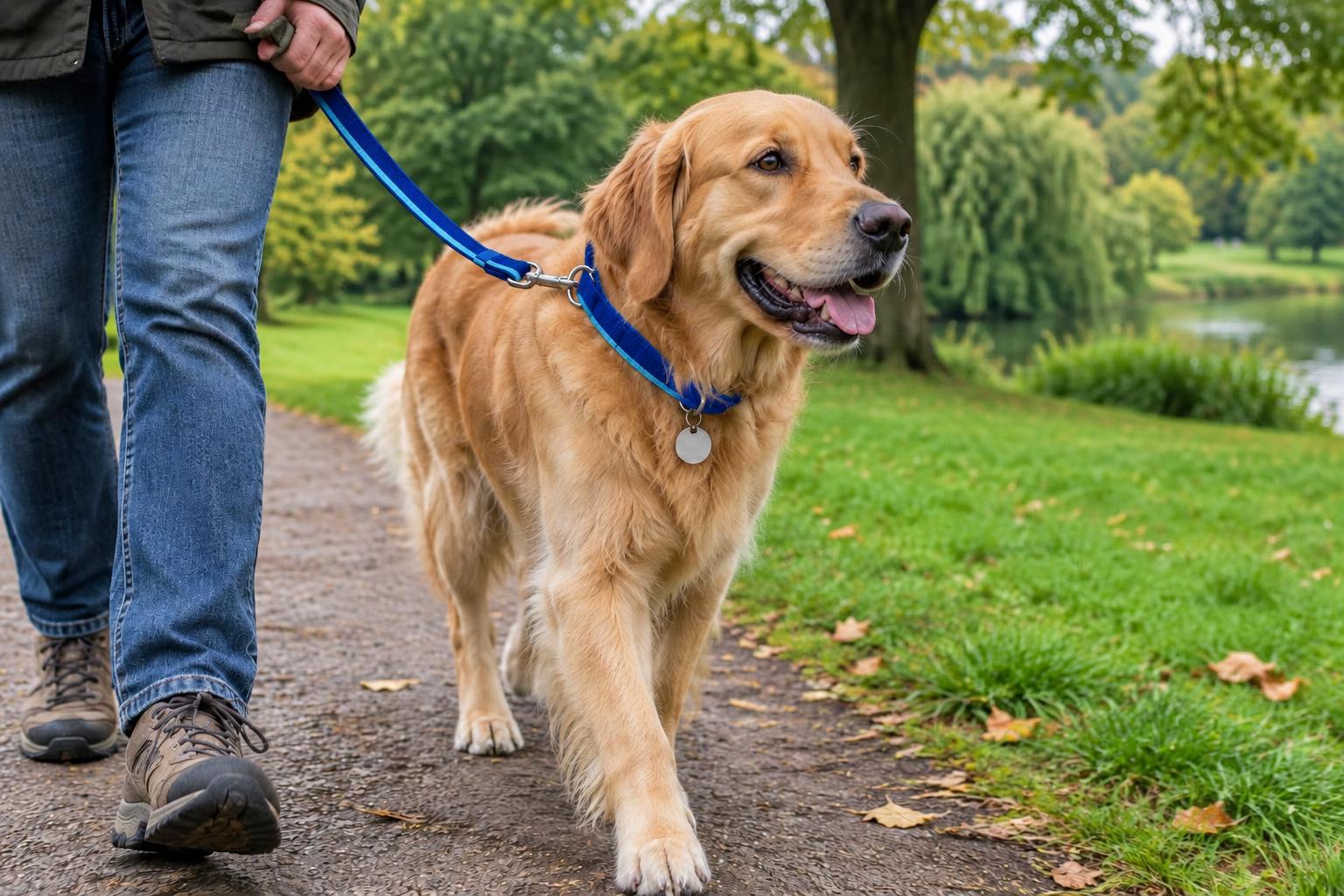
In England, a dog in a public place generally needs to wear a collar displaying the owner’s name and address, either on the collar or on an attached identification plate or badge. Certain working dogs are exempt. This is a separate requirement from microchipping, so a chip alone does not normally meet the collar-identification rule.
A telephone number is not specified by that rule, but many owners add one to make it easier for a finder to call. If you live elsewhere in the UK, check the law that applies there. Read the Control of Dogs Order 1992 for the England rule.
Can I use an NFC dog tag?
Yes, as an additional layer of identification. With a compatible phone, a finder can tap a TapHalo NFC Pet ID tag to open your dog’s linked web profile. You choose what contact and care details to display there, and can update the online details without replacing the tag.
An NFC profile can include your dog’s name, a contact method, an emergency contact or important care notes. Avoid putting private details on a public profile unless you are comfortable sharing them. The tag is not GPS, and it does not replace a microchip or a legally compliant visible collar ID showing the required name and address. The finder needs a compatible phone and internet access to open the page.
Do I have to keep my dog under control?
Yes. The law on dangerously out-of-control dogs can apply on public and private property. A bite is not the only concern: behaviour creating reasonable apprehension of injury can matter too. Take precautions around people and animals, and understand how your dog responds in unfamiliar situations. See GOV.UK’s dog-control guidance.
Does my dog have to be on a lead?
There is no universal rule requiring every dog to be on a lead everywhere. Local restrictions and rules for particular sites may require a lead or exclude dogs from certain spaces, including some parks and play areas. Check posted signs and the relevant council’s restrictions before walking somewhere unfamiliar; keep your dog under effective control wherever you are.
Do I have to pick up my dog’s poo?
In many public places, yes. Local Public Spaces Protection Orders can make dog fouling an offence and lead to a fine if you do not clean up. Carry waste bags and check local signs and council guidance for restrictions that apply where you walk.
What are the rules around dogs and livestock?
Allowing a dog to attack or worry livestock can be an offence. Even a dog that seems to be playing can cause serious distress or injury to sheep, cattle or other farm animals. Keep your dog under effective control, follow signs and take particular care near grazing animals. In England and Wales, strengthened livestock-worrying rules came into force in March 2026, including stronger police powers and potentially unlimited fines. Rules differ elsewhere in the UK; check the government’s 2026 update before countryside walks.
What are my animal welfare responsibilities?
Dog owners must meet their dog’s welfare needs. These include a suitable living environment, a suitable diet and fresh water, opportunities to behave normally, appropriate company or separation from other animals, and protection from pain, suffering, injury and disease. Veterinary care may be necessary when your dog is unwell. Read government welfare guidance for more detail.
Are any dog types banned or restricted?
In England and Wales, restrictions apply to Pit Bull Terrier, Japanese Tosa, Dogo Argentino, Fila Brasileiro and XL Bully types. The law can assess physical characteristics, not only the breed named on paperwork. Strict conditions apply to exempted dogs; the rules differ across the UK and can change, so if you may be affected, check the latest official banned-dogs guidance.
A simple dog owner checklist
- Microchip your dog when required and keep the registered contact details current.
- Use legally compliant visible collar identification where required.
- Keep your dog under control and follow local lead and dog-fouling restrictions.
- Take extra care around livestock and meet your dog’s welfare needs.
- Check any rules that apply to your dog’s type and where you live or travel.
A microchip offers permanent identification. A visible collar tag gives a finder immediate information. An NFC tag can add a linked profile that you can update. Together they serve different purposes — none replaces the others where the law requires them. If your dog is missing, follow our lost dog action guide.
Frequently asked questions
Is microchipping compulsory for dogs in the UK?
Dogs must generally be microchipped, but the detailed rules differ between England, Wales, Scotland and Northern Ireland. In England, dogs generally need a registered microchip by eight weeks old.
Does a microchip replace a dog ID tag?
No. In England, dogs in public places generally need a collar showing the owner's name and address, subject to limited exemptions, even when microchipped.
Does an NFC dog tag replace a microchip?
No. An NFC tag is additional identification, not a replacement for a legally required microchip or visible collar identification.
Does a dog have to wear a collar in public?
In England, dogs in public places generally need a collar carrying the owner's name and address, either on the collar or an attached plate or badge. Some working dogs are exempt.
Is a telephone number legally required on a dog tag?
The England collar-identification rule specifies the owner's name and address, not a telephone number. A phone number can still help a finder reach you quickly.
Can I let my dog off the lead?
There is no blanket requirement to keep every dog on a lead everywhere. You must keep your dog under control and follow local restrictions and site-specific rules.
What should I do if my dog goes missing?
Search the immediate area, notify the microchip database and contact your local council's dog service and nearby vets. Check your registration details are current.
For more about smart tags and microchips, see the NFC Pet ID FAQ. Going away? Prepare care instructions with the pet sitter checklist.
Official sources
- GOV.UK — Get your dog microchipped
- The Control of Dogs Order 1992 — collar identification (England)
- GOV.UK — Controlling your dog in public
- GOV.UK — Dog fouling and Public Spaces Protection Orders
- GOV.UK — Dogs and livestock
- GOV.UK — Animal welfare
- GOV.UK — Banned dogs
This article is general information, not legal advice. Dog laws vary across England, Wales, Scotland and Northern Ireland and may change. Check current government and local-authority guidance for your circumstances.
Connected Pets. Complete Peace of Mind.
Give your dog another way to be found
TapHalo Pet ID adds an updateable web profile to your dog’s identification. It complements, rather than replaces, legally required collar details and a microchip.