

Pet care guide
Pet Sitter Checklist — The Complete UK Guide
Everything your sitter, walker or family member needs to care for your pet.
Leaving your pet with a sitter, dog walker, friend or family member can feel like a big responsibility. A good pet sitter checklist gives your sitter clear instructions, helps maintain your pet's normal routine and makes sure important information is available if something unexpected happens. Whether you're leaving your dog for a weekend or arranging regular care while you're at work, this guide covers the essential information to give your pet sitter.
The pet sitter checklist at a glance
Before leaving your pet in someone else's care, make sure your sitter has the following:
- Feeding instructions
- Fresh water instructions
- Walking routine
- Medication details
- Veterinary information
- Emergency contacts
- Allergies and health information
- Behaviour and temperament notes
- Daily routine
- House and access instructions
- Pet supplies and equipment
- Visit and care-record instructions
Let's look at each one.
1. Feeding instructions
Write down exactly what your pet normally eats. Include the type and brand of food, the amount per meal, feeding times, where food is stored, treat allowance, foods that must be avoided and any special feeding requirements.
Try to be specific rather than simply saying "feed twice a day." For example:
Breakfast: 150g at approximately 8:00am
Dinner: 150g at approximately 6:00pm
Treats: maximum of two per day
Maintaining a familiar routine can make things simpler for both your pet and their sitter.
2. Water
Tell your sitter where your pet's water bowls are located and how often you'd like them checked or refreshed. If your pet uses a water fountain or another type of dispenser, explain how it works.
3. Walks and exercise
If you're preparing a dog sitter checklist, walking instructions are particularly important. Include normal walking times, typical walk duration, preferred routes, lead or harness instructions, whether your dog can be let off the lead, how your dog behaves around other dogs, how they react to traffic, cyclists or children, and any places or situations to avoid.
Also tell the sitter where leads, harnesses, waste bags and towels are kept.
4. Medication
If your pet requires medication, provide clear written instructions. Record the medication name, dose, time, how it should be given and where it's stored. Avoid relying solely on verbal instructions.
Your sitter should also know what to do if a dose is missed or if there is uncertainty about whether medication has already been given. For medication-specific questions, make sure they have the appropriate veterinary contact details rather than guessing.
5. Veterinary information
Leave your veterinary practice details somewhere easy to find: the vet's name, practice, telephone number, address and out-of-hours or emergency number.
You should also explain what you'd like your sitter to do if they believe your pet needs veterinary attention and how you can be contacted.
6. Emergency contacts
Your own number shouldn't be the only contact available. Consider providing an alternative owner or family member, a local emergency contact, your veterinary practice and an emergency or out-of-hours vet.
If you're travelling abroad, tell your sitter the best way to contact you.
7. Allergies and important health information
Make your sitter aware of any known allergies or important care information. This might include foods or substances your pet needs to avoid and any relevant instructions you've received from your vet. Keep this information clear and easy to locate.
8. Behaviour and personality
Every pet is different, and your sitter should understand what's normal for yours. Tell them about behaviour around strangers and other animals, separation behaviour, things that frighten your pet, favourite toys, sleeping habits, commands they recognise, areas they're not allowed into and anything likely to cause stress.
Small details can make looking after somebody else's pet considerably easier.
9. Daily routine
Pets often become accustomed to familiar routines. Create a simple daily schedule for your sitter. For example:
7:30am — toilet/garden
8:00am — breakfast
9:00am — morning walk
1:00pm — garden/toilet break
5:30pm — walk
6:30pm — dinner
10:00pm — final toilet break
It doesn't need to be complicated. The objective is to give the sitter a useful picture of your pet's normal day.
10. House and access instructions
If the sitter will be visiting your home, provide practical instructions before you leave: how they'll gain access, alarm instructions if applicable, where pet supplies and cleaning products are kept, where leads and equipment are stored, which doors or gates must remain closed and where your pet normally sleeps.
Never publish security codes, key locations or other sensitive home-access information on publicly accessible profiles.
11. Prepare your pet supplies
Before leaving, make sure there's enough of everything your pet is likely to need: food, treats, medication, waste bags, litter, bedding, leads, harnesses, towels, toys and cleaning supplies.
It's worth leaving a little more food and medication than the expected minimum in case your plans change.
12. Keep a record of pet sitter visits
If several people are helping with your pet — or you're away for more than a day — it can become difficult to know exactly what's happened. Has the dog been fed? Has medication been given? When was the last walk? What time did the sitter visit? How was your pet behaving?
A simple pet care visit record can help everyone stay informed.
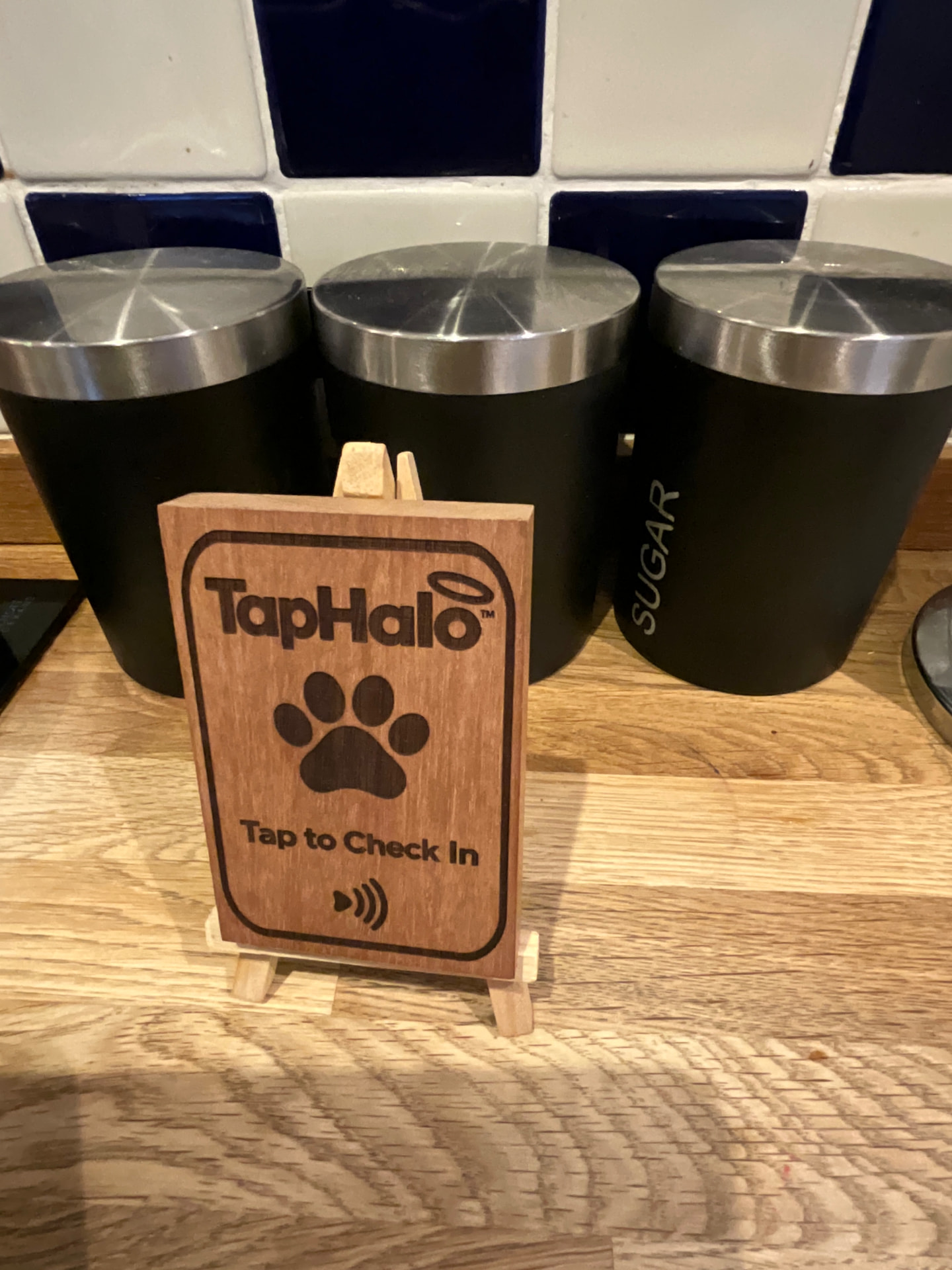
Make pet sitting easier with the TapHalo Pet Care Station
Instead of relying entirely on handwritten notes and messages, the TapHalo Pet Care Station provides a simple digital way to help record pet-care visits. When an approved sitter or walker arrives, they sign in, check in at the station and record visit information such as feeding, walks, medication, welfare observations and care notes. Owners can review those records privately and receive a completion email. Working out how long your dog can stay home while you're out? Read our guide to how long you can leave a dog alone in the UK.
It gives owners and carers a clearer record of what's happened while the owner is away — particularly useful when different family members, pet sitters or dog walkers share responsibility for the same pet. A tap alone does not prove care was completed; records are submitted by the signed-in carer.
Sitter arrives → taps the station → records the visit → the pet's care information stays organised.
Before you leave your pet with a sitter
Run through your checklist one final time:
- Food prepared
- Feeding instructions provided
- Water instructions provided
- Walk routine explained
- Medication instructions provided
- Vet details available
- Emergency contacts provided
- Allergies explained
- Behaviour discussed
- Daily routine provided
- Supplies available
- Access arrangements confirmed
- Pet-care recording method agreed
A few minutes spent preparing can make the experience easier for you, your sitter and — most importantly — your pet.
Frequently asked questions
What information should I leave for a pet sitter?
At minimum, provide feeding instructions, exercise requirements, medication information, veterinary details, emergency contacts, allergies, behavioural information and your pet's normal daily routine.
What should I leave for a dog sitter?
Along with food and care information, leave detailed walking instructions, leads or harnesses, waste bags and information about how your dog behaves around people, dogs and other animals.
Should I leave written instructions for my pet sitter?
Yes. Written or securely stored digital instructions give the sitter something to refer back to rather than relying on memory.
How can I keep track of pet sitter visits?
A pet-care log can record when visits take place and what care has been provided. The TapHalo Pet Care Station is designed to help owners and carers create a digital record of pet-care visits and activities.
What should a pet sitter record after each visit?
Useful information can include arrival or visit time, feeding, water, walks, medication where applicable, toilet activity, general wellbeing and anything unusual the owner should know about.
For more about subscriptions, visit records and privacy, see our pet care questions.
Connected Pets. Complete Peace of Mind.
Better information. Better connected pet care.
Leaving your pet with somebody else shouldn't mean losing visibility over their care. TapHalo brings pet identification and connected pet care together.