

Dog care guide
How Long Can You Leave a Dog Alone?
A UK guide to safe time alone at home.
If you work, go shopping, meet friends or simply need to leave the house, there will inevitably be times when your dog is home without you. But how long can you safely leave a dog alone? Can you leave a dog for four hours, six hours, or a full eight-hour working day? This UK guide covers the recommended limits for adult dogs and puppies, the signs a dog isn't coping, and how to build up time alone gradually.
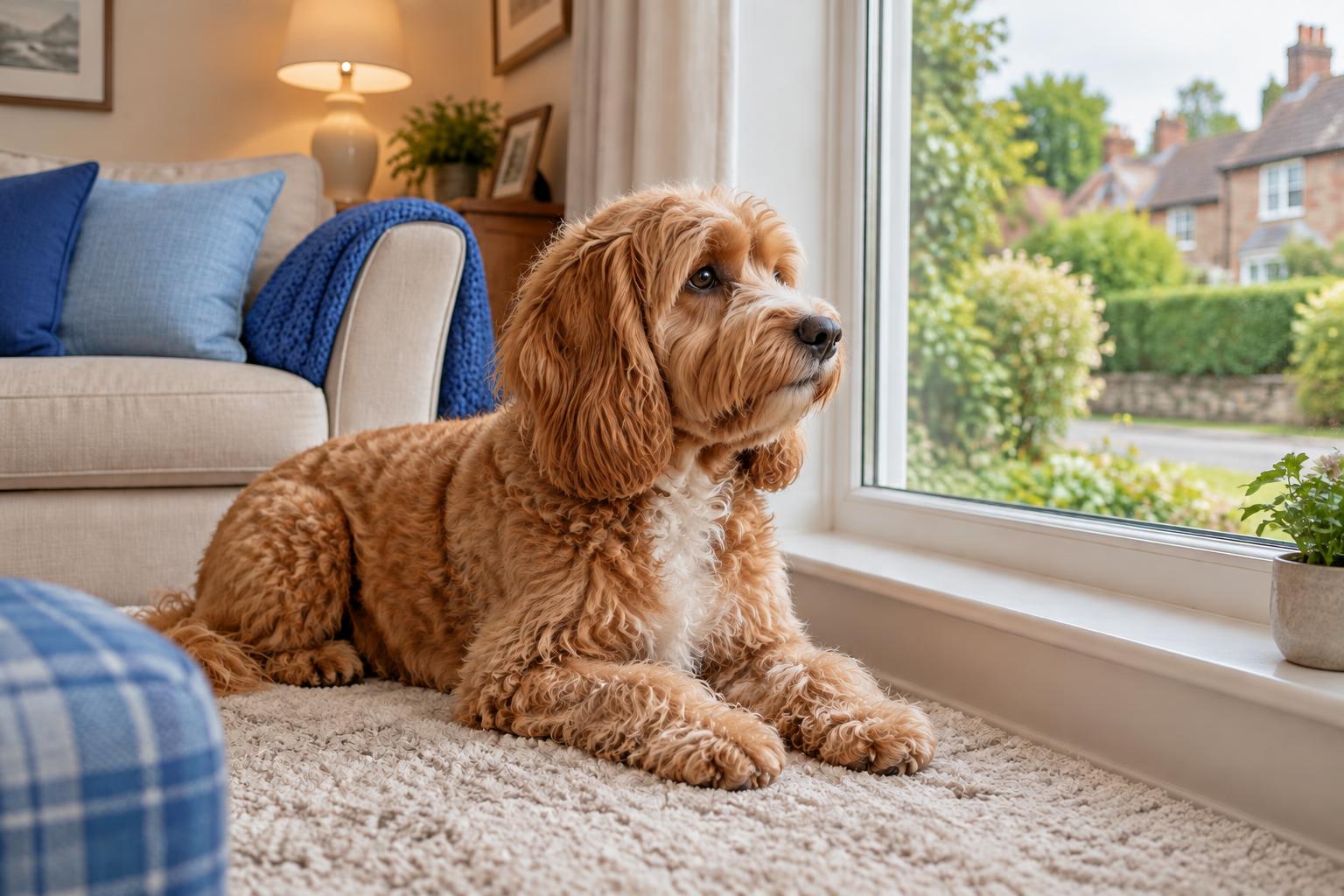
How long is too long to leave your dog home alone?
There isn't one exact time that suits every dog. A dog's age, health, personality, training and previous experience of being alone all make a difference.
However, leading UK animal-welfare organisations generally recommend that adult dogs shouldn't routinely be left alone for more than around four hours at a time. Puppies usually need considerably shorter periods.
How long can an adult dog be left alone?
For a healthy adult dog that has gradually learned to be comfortable alone, around four hours should generally be considered an upper limit rather than a target.
Some dogs will struggle long before four hours. Others may appear comfortable for several hours, but they'll still need opportunities to:
- Go to the toilet
- Exercise
- Interact with people
- Receive appropriate food and water
- Have mental stimulation
Dogs Trust recommends avoiding leaving adult dogs alone for more than four hours. If you'll be away longer, it recommends arranging for somebody to visit or look after your dog.
Can I leave my dog alone for 8 hours while I work?
Leaving a dog completely alone for an entire eight-hour working day isn't recommended.
And remember that an eight-hour job can actually mean your dog is alone for considerably longer. For example:
Leave home: 8:00am
Commute: 45 minutes
Work: 8 hours
Commute home: 45 minutes
Your dog could potentially be alone for 9½ hours.
For many dogs, that's too long without company, exercise and a toilet break.
If you're regularly away for a full working day, consider arranging a dog walker, pet sitter, family member, trusted neighbour or doggy day care. Even a visit part-way through the day can break up a long period alone.
How long can you leave a puppy alone?
Puppies require much more frequent attention than adult dogs. They need regular toilet breaks, feeding, training, social interaction and opportunities to experience the world around them.
There isn't a universal "one hour per month of age" rule that should be treated as a guarantee — individual puppies develop differently.
Instead, start with very short periods and gradually teach your puppy that being alone is normal and safe. That could initially mean only leaving the room for a few seconds. As your puppy becomes comfortable, gradually increase the amount of time you're away.
The objective isn't simply to see how long your puppy can tolerate being alone. It's to teach them not to fear being alone.
What about older dogs?
Senior dogs can also need more frequent attention. An older dog may need:
- More frequent toilet breaks
- Medication
- Additional water
- Shorter but more regular walks
- Help moving around
- Monitoring for health problems
A dog that previously managed several hours alone may find this increasingly difficult as they age. Changes in behaviour in an older dog should therefore not automatically be dismissed as "old age".
If your dog's ability to cope alone changes unexpectedly, speak to your vet.
Every dog is different
Four hours isn't a magic number. The amount of time an individual dog is comfortable being left can depend on:
Age
A young puppy has very different needs from a healthy adult dog.
Health
Medical conditions may mean your dog needs more frequent care.
Personality
Some dogs are naturally more independent than others.
Training
Dogs need to learn gradually that being alone is safe.
Previous experiences
A rescue dog or dog that has experienced instability may need considerably more time to adjust.
Routine
A sudden change from having someone at home all day to being left for several hours can be difficult.
How do I know if my dog isn't coping?
This is particularly important because owners aren't there to see what happens after they leave. Signs that a dog may be struggling include:
- Barking
- Whining
- Howling
- Pacing
- Panting
- Excessive drooling
- Toileting indoors
- Destructive behaviour
- Attempting to escape
- Trembling
- Becoming unusually withdrawn
PDSA explains that separation-related problems can involve anxiety, fear, panic, frustration or other forms of distress. Some dogs don't show obvious signs when their owner is present, making the problem difficult to detect.
Should I use a pet camera?
A pet camera can be useful for understanding what your dog actually does after you leave. You might discover that your dog settles down and sleeps. Alternatively, you might discover pacing, barking or other signs of distress you didn't know were happening.
PDSA suggests that cameras can be useful when investigating potential separation-related problems.
However, a camera isn't a replacement for actual care. It can show you that your dog needs the toilet. It can't take them outside.
What is separation anxiety?
Dogs are social animals, and some find being separated from their owners particularly difficult. The broader term "separation-related problem" is often used because not every dog experiencing difficulty is necessarily anxious — a dog could be frightened, frustrated, bored or distressed for another reason.
Separation-related problems can seriously affect both the dog's welfare and the owner's quality of life. If you think your dog is struggling, contact your vet. Your vet can investigate possible medical causes and, where appropriate, recommend a suitably qualified behaviour professional.
Don't punish your dog
If you return home and discover that your dog has chewed something, barked, scratched a door or had a toilet accident, don't punish them. If the behaviour occurred because your dog was frightened or distressed, punishment can make the problem worse.
Your dog isn't necessarily being "naughty". You need to understand why the behaviour happened.
How to teach a dog to be left alone
Being comfortable alone is something dogs can learn. Start slowly.
Step 1 — Create a comfortable space
Give your dog somewhere safe and comfortable where they can relax. Provide an appropriate bed and access to fresh water.
Step 2 — Start while you're home
Encourage your dog to settle without constantly being beside you. You could briefly move into another room while your dog remains somewhere comfortable.
Step 3 — Leave for a very short period
Initially, this could mean only seconds or minutes. Return while your dog is still comfortable.
Step 4 — Gradually increase the time
Slowly increase the period you're away. Don't suddenly jump from ten minutes to four hours.
Step 5 — Watch your dog's response
If your dog becomes distressed, you've progressed too quickly. Reduce the duration and build up more gradually.
Exercise before you leave
Where appropriate for your dog's age and health, giving them an opportunity to exercise and go to the toilet before you leave can help them settle. PDSA recommends taking dogs out before leaving them alone.
A dog that has had an appropriate walk, sniffing opportunities and a toilet break may find it easier to relax afterwards.
Give your dog something to do
Appropriate enrichment can help some dogs. Depending on your dog, this might include food puzzles, safe chew toys, treat-dispensing toys or snuffle activities. Make sure anything left with an unsupervised dog is genuinely safe for that individual animal.
Also remember that toys don't solve genuine separation anxiety. A highly distressed dog may not even engage with food or toys.
What if I work full-time?
Having a full-time job doesn't automatically mean you can't have a dog. But you need a realistic care plan. If you're away for longer than your dog can comfortably manage, consider arranging for somebody to visit:
A dog walker
A walker can provide exercise, human interaction and an opportunity to go to the toilet.
A pet sitter
A sitter can spend time with your dog and potentially handle feeding and other agreed care.
Friends or family
Someone you trust may be able to visit during the day.
Doggy day care
Some dogs enjoy appropriate daycare environments, although they aren't suitable for every dog.
How the TapHalo Pet Care Station can help
The TapHalo Pet Care Station is designed for exactly this type of situation. It provides a digital connection point for people caring for your pet.
When a pet sitter, dog walker, friend or family member visits, they can use the TapHalo Pet Care Station to access the relevant pet-care experience and record care information. Depending on the TapHalo features being used, this can include:
- Visits
- Feeding
- Walks
- Medication
- Pet welfare
- Care activities
Instead of relying entirely on handwritten notes or separate messages, owners can have a clearer record of what's happened. See how it works in our Pet Care Station guide.
Leaving your dog with a pet sitter
If somebody is visiting your dog while you're away, give them clear instructions. They should know:
Feeding routine
What does your dog eat and when?
Walking routine
How long and where should your dog be walked?
Behaviour
How does your dog react to strangers, children and other dogs?
Medication
Does your dog have medication that needs to be administered according to veterinary instructions?
Veterinary details
Which veterinary practice should they contact if there's a problem?
Emergency contacts
Who should they call if they can't reach you?
Access instructions
How will they safely enter and secure your home?
Planning a stay with a sitter? Our UK pet sitter checklist covers what to hand over.
How often should a dog walker visit?
There isn't a universal schedule. It depends on your individual dog and how long you're away.
If your dog shouldn't routinely be left for more than around four hours, plan their care so somebody can provide an appropriate break before they exceed the amount of time they're comfortable alone. Puppies, senior dogs and dogs with medical or behavioural needs may require considerably more frequent attention.
Frequently asked questions
How long can a dog be left alone in the UK?
Leading UK welfare organisations generally recommend that adult dogs shouldn't routinely be left alone for more than around four hours. Individual dogs may cope with considerably less.
Can a dog be left alone for 8 hours?
Regularly leaving a dog completely alone for eight hours isn't recommended. If you're working a full day, consider arranging a dog walker, pet sitter, friend, relative or appropriate daycare.
Can I leave my dog alone while I'm at work?
Potentially, but you'll need to consider your dog's individual needs and the total amount of time you're away. If it's too long, arrange appropriate care during the day.
How long can a puppy be left alone?
Puppies need much shorter periods alone than adult dogs. Start with very short periods and gradually build up as your puppy learns to feel comfortable.
Should I leave the TV on for my dog?
Some dogs may find background sound relaxing, while others won't care. It shouldn't be considered a substitute for training, appropriate stimulation or human interaction.
Is a pet camera enough if I'm at work?
No. A camera can help you observe your dog, but it can't provide exercise, companionship or a toilet break.
Should I get a dog walker?
If you'll regularly be away for longer than your dog is comfortable being left alone, a suitable dog walker or pet sitter can be a useful part of your dog's care routine.
How can I know whether the dog walker has visited?
Agree on a reliable check-in system with the person caring for your dog. The TapHalo Pet Care Station is designed to help create a digital record of visits and relevant pet-care activities.
It's not just about the clock
The most important question isn't simply "how many hours can I leave my dog?" It's "is my dog comfortable, safe and having their needs met while I'm away?"
For many adult dogs, around four hours represents a sensible maximum guideline for routine periods alone. But some dogs need considerably more frequent care. Learn your dog's behaviour, build up alone time gradually, and arrange help when you're going to be away for longer.
And make sure everyone involved in looking after your dog knows what care has already been provided.
Connected Pets. Complete Peace of Mind.
Stay connected with your dog's care
The TapHalo Pet Care Station helps pet owners create a clearer record when dog walkers, pet sitters, friends or family are helping care for their dog — visits recorded, walks recorded, feeding recorded. Combine it with the TapHalo NFC Pet ID Tag for a more connected approach to pet identification and everyday care.